Why Canvas Wall Tents Outlast Synthetic Alternatives
The Best Knot Strategies For Outdoor Tents Person LinesThe Hold Hitch is a straightforward and safe way to establish camping tent man lines. It's additionally a wonderful method for backing out a stubborn outdoor tents secure. It can also be made use of to produce a flexible tarpaulin guy line where the change is made at the tent/tarp end. It works in high winds as it does not slide.
1. Bowline
Bowline is a knot that makes a loop at one end of a rope. It's simple to connect and untie, and it withstands jamming rather well.
It's likewise an excellent knot to utilize for joining two lines with each other, although it's generally advised that you make use of a various strategy (such as a sheet bend or square knot) for this objective, to stay clear of having both different bowlines put on versus each other gradually and deteriorate the line.
One prospective issue with bowlines is that they can conveniently jam or bind if the functioning end is inaccurately travelled through the bunny opening. A number of vital failings have been reported as a result of this, particularly when used in climbing applications. To help prevent this from happening, you can make a left-handed bowline by passing completion around the standing part of the loophole rather than with it, as displayed in the animation below. This variation reportedly carries out far better and withstands ring tension (a distending force used either side of the knot) much better than the typical bowline.
2. Grip Hitch
Utilizing these gripping drawbacks to safeguard your guy lines aids you stay clear of the issue of your line jamming while changing or tightening them. They are likewise useful when affixing a line to a things that is more challenging to reach than your standing end, such as a tree or large anchor things.
The Grasp Hitch is a friction knot that can be conveniently moved up or down the line while slack but holds firm under lots. It serves for tensioning ridgelines or person lines and for camping applications to secure tarpaulins or outdoors tents.
To tie the Grip Hitch, pass the working end around the standing component two times and put it under itself. To tighten up, pull on the working end to produce a bight and then use the bight to secure the knot to itself. For included protection, you can cover the working end around the standing component 3 times to enhance rubbing and avoid the drawback from slipping under tons.
3. Midshipman's Hitch
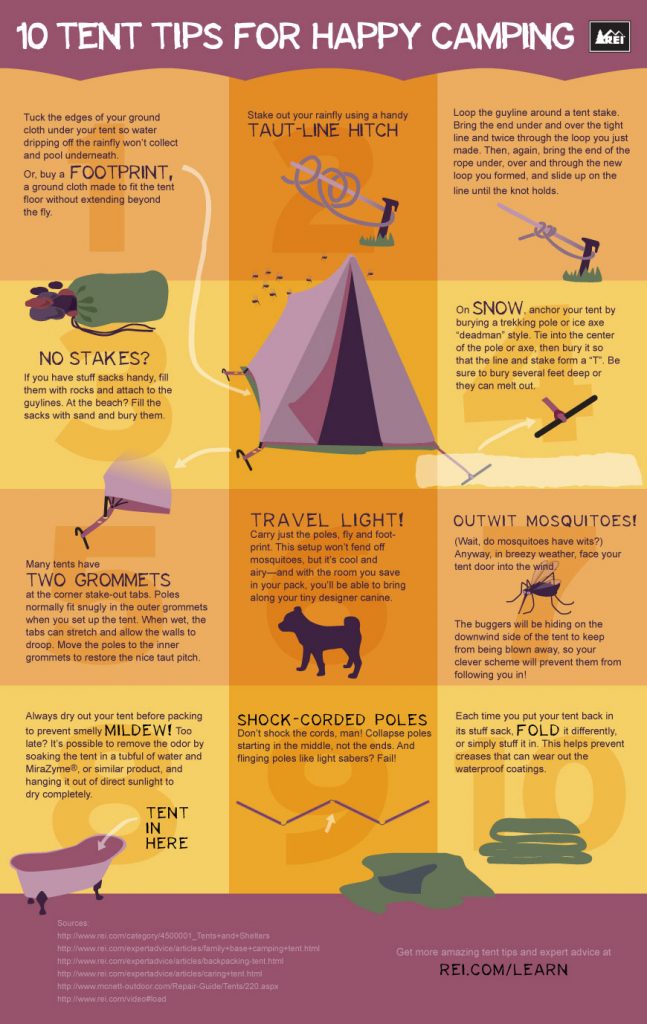
Additionally referred to as the Taut Line Drawback (ABOK # 1856, p 310), Flexible Hitch, or Rigger's Drawback this knot creates a flexible loop at the end of a rope that can be slid backwards and forwards the standing end but still holds firmly when tightened up. It is also very easy to unknot while under tons.
Ashley advises this knot for a camping tent individual line due to the fact that unlike the bowline it can be tied while under tent ventilation lots and is less vulnerable to twisting. It also creates an intermediate Awning Drawback that can take the preliminary lots while tying the last Half Hitch
To use this knot cover the working end around an item such as a post or cleat. Next pass it back towards the item via the initial Half Hitch developing a second Awning Hitch. Ultimately finish connecting the final Half Hitch and pull hard to gown and tighten. For added protection cover a 2nd Midshipman's Hitch on top of the initial.
4. Flexible Hold Hitch.
The Adjustable Grasp Hitch, also referred to as the Crawley Adjustable Drawback and the Adjustable Loop Knot, is a friction drawback that can be quickly changed up or down a line with slack but holds firm under load. It is frequently made use of for adjusting camping tent ridge lines or tarpaulins around camp.
This slide-and-grip knot gives good hold and is much easier to link than the Tautline Hitch or Midshipman's Hitch, yet should not be used for vital applications given that it may slip when shock loaded. It can be enhanced by including added starting turns to enhance the "grasp" and friction in unsafe products.
To tie this friction hitch, pass the working end around the item, after that wrap it back alongside itself and tuck the end under the 2nd turn. Draw the functioning end to tighten the knot.